
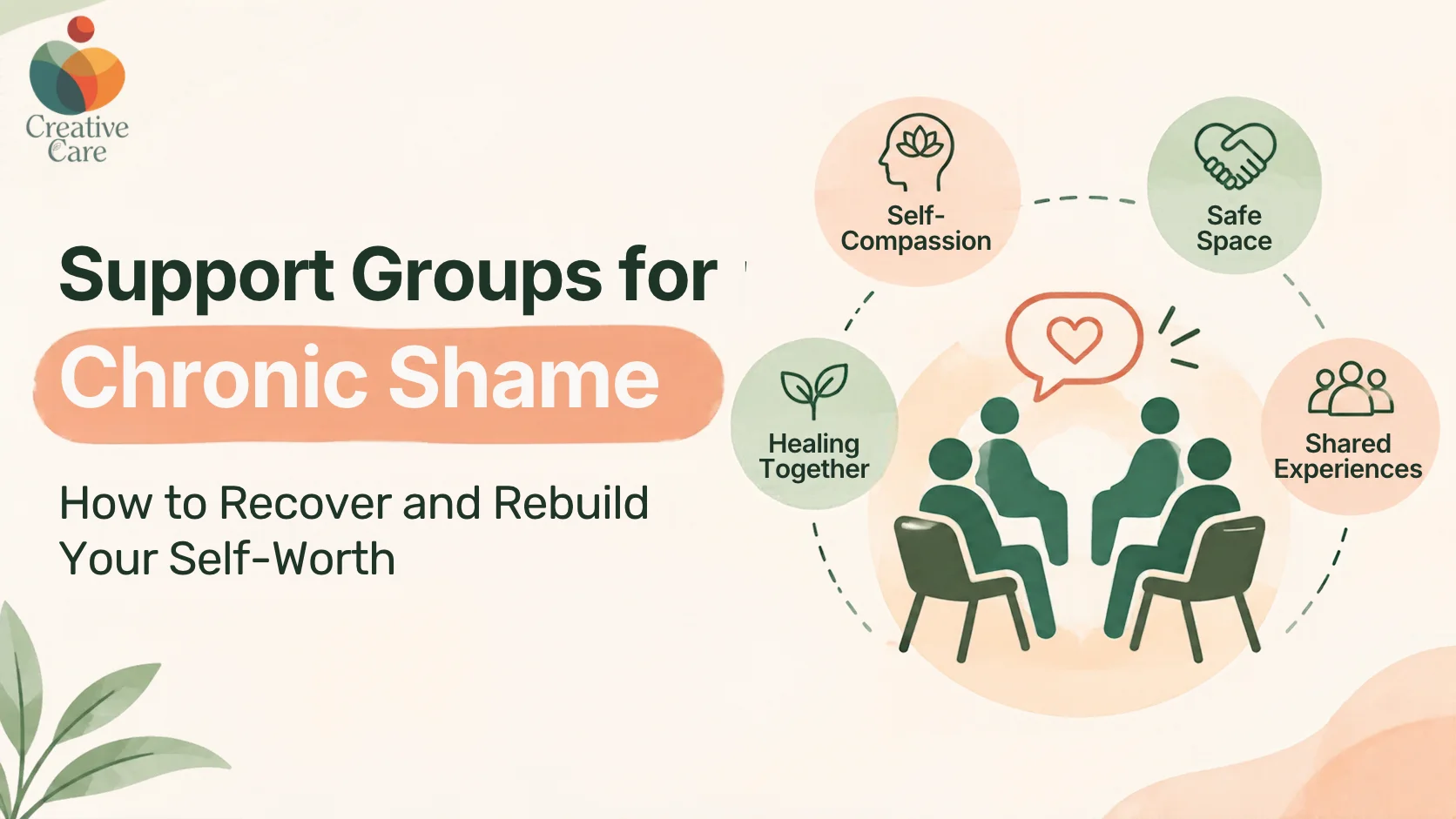
- How can I recover from chronic shame, and do support groups actually help?
You can recover from chronic shame by naming it, understanding where it began, replacing self criticism with self compassion and sharing your story in safe relationships. Support groups help because shame grows in secrecy and isolation. Being heard by people with similar experiences, ideally in a group guided by a trained therapist, weakens shame's grip over time.
What chronic shame looks like in daily life
Chronic shame rarely announces itself. More often it shows up as a harsh inner voice, perfectionism, people pleasing, trouble accepting compliments, hiding mistakes or keeping others at a distance. Many people searching for help with self esteem issues are actually describing shame.
It usually has roots. Childhood emotional neglect, bullying, trauma, discrimination, or years of being told you are "too much" or "not enough" can all teach a person that the problem is them. Neurodivergent adults and disabled people often carry shame from a lifetime of hearing that they are doing life the wrong way. If your story began early, therapy for childhood emotional neglect can help you understand where these beliefs came from.
Why support groups work for shame
Shame tells you that if people really knew you, they would leave. A support group tests that belief in real time. You share something you have hidden for years, and instead of rejection, you see nods of recognition. That experience, repeated week after week, does something that self help alone often cannot.
The research backs this up. Compassion Focused Therapy (CFT), developed by psychologist Paul Gilbert, was designed specifically to target shame and self criticism, and it is often delivered in groups. A 2018 study published in the British Journal of Clinical Psychology found that people in a CFT group showed improvements in shame and self criticism that the comparison group did not, and those gains held at a two month follow up. A later systematic review reported consistent drops in self criticism and in shame about how others see us, while noting that evidence for deeper internal shame is still more limited. In other words, groups help, and they work best as part of a wider healing process.
What recovery actually involves
Healing is less a single breakthrough and more a set of small, repeated shifts:
- Notice and name it. Saying "this is shame" creates a little distance from it.
- Trace the roots. Ask whose voice your inner critic sounds like.
- Separate actions from identity. A mistake is something you did, not who you are.
- Practise self compassion. Speak to yourself the way you would speak to a friend.
- Share in safe spaces. Start with one trusted person, a group or a therapist.
- Get steady support. Shame loosens faster with someone walking alongside you.
- What’s the difference between guilt and shame, and how do I overcome feelings of guilt that won’t go away?
Guilt says "I did something bad," while shame says "I am bad." Guilt focuses on a specific action and can motivate repair. Shame targets your whole self and pushes you to hide. To overcome feelings of guilt that won't go away, check whether the guilt is proportionate, make amends where possible, and work on any shame underneath it.
This distinction comes largely from the work of psychologist June Price Tangney at George Mason University. Her research on moral emotions shows that guilt tends to lead people toward apology and repair, while a tendency toward shame is linked with withdrawal, defensiveness and a higher risk of other psychological difficulties.
Here is a simple example. Imagine you forget a close friend's birthday. Guilt sounds like: "I forgot, I feel bad, I'll call her today." Shame sounds like: "I'm a terrible friend. No wonder people drift away from me." The first leads to a phone call. The second leads to avoiding her altogether.
Why some guilt never seems to leave
When guilt lingers long after you have apologised or put things right, it is often shame in disguise. The event is over, but the verdict about yourself remains. This is common among trauma survivors who blame themselves for what happened to them, people raised with rigid rules about being good, and women who feel they are always falling short across work, family and caregiving.
Practical ways to work through stuck guilt
Start by asking an honest question: did I actually act against my own values, or against rules I absorbed from someone else? If you did cause harm, repair what you can through a sincere apology or changed behaviour, then let the matter close. If you have already made amends, or did nothing wrong, the remaining feeling is worth exploring rather than obeying. Writing yourself a letter as you would to a struggling friend can help. So can bringing the feeling into therapy, where a professional can help you separate real responsibility from inherited blame.
- Are there therapy or support groups in India for people with chronic shame and low self-esteem?
Yes. In India, people dealing with chronic shame and low self esteem can access individual therapy, therapist led group therapy, listening circles and peer support groups, both in person and online. Creative Care in Hyderabad offers trauma informed group therapy, listening circles and lived experience peer support for people who want to heal in a safe, guided space.
Types of support worth exploring
Different formats suit different people and different stages of healing.
Therapist led group therapy offers structure, a trained facilitator and clear agreements about confidentiality. It is a good fit if you want guided work on shame alongside others.
Listening circles focus on being deeply heard without anyone trying to fix you. For people who have felt dismissed for years, this alone can be healing.
Peer support connects you with people who have lived through similar experiences and have training to support others. Seeing someone further along the road can make recovery feel possible.
Individual therapy gives you a private space to explore the roots of shame at your own pace, and many people combine it with a group.
How Creative Care supports people living with shame
Creative Care is a psychotherapy practice based in Begumpet, Hyderabad, offering trauma informed and affirmative care. Its services are cocreated with people who have lived experience of mental health challenges, which matters when shame has made you wary of being judged.
You can join guided group therapy sessions in a safe, structured setting, or take part in listening circles that centre on compassionate, judgement free connection. Creative Care also offers lived experience peer support for depression, queerness and neurodivergence. If you would rather begin one to one, individual psychotherapy ranges from talk therapy to somatic approaches. The practice also has a particular focus on women's mental health, neurodivergence, trauma and disability affirmative therapy, all areas where shame often runs deep.
What to look for in any support group
Wherever you seek help, a good group should have a trained facilitator, clear ground rules on confidentiality, a manageable size and no pressure to share before you are ready. It should feel affirming of who you are, including your gender, sexuality, body, neurotype and background. It is also fair to ask about the qualifications of the person leading the group.
Conclusion: Healing Chronic Shame Starts With Being Heard
Chronic shame convinces you that you must hide to stay safe. Recovery works in the opposite direction. It begins when you name what you feel, understand where it came from and let safe people see you as you are. Guilt can point you toward repair, but shame needs compassion, connection and time.
Support groups offer something rare: proof that you are not the only one, and that you are still worthy of belonging. Paired with good therapy, they can help you rebuild a sense of self worth that does not depend on being perfect.
If you are ready to begin, you can meet Creative Care's therapists and make an appointment, or reach the team on WhatsApp at +91 99635 15777 to ask which group or therapy format might suit you.
Frequently Asked Questions
Can chronic shame be healed completely?
Chronic shame can ease significantly, to the point where it no longer drives your choices or relationships. Most people find that shame still visits occasionally, but it passes faster and feels less convincing. With therapy and supportive relationships, you learn to recognise it and respond with compassion instead of hiding.
How long does it take to heal from chronic shame?
There is no fixed timeline to heal from chronic shame. It depends on how long the shame has been present, where it came from and the support you have. Many people notice small shifts within a few months of regular therapy or group work, while deeper change usually unfolds over a longer period.
Is group therapy better than individual therapy for shame?
Neither is better for everyone. Group therapy directly challenges the isolation that keeps shame alive, while individual therapy offers privacy to explore painful roots at your own pace. Many people benefit from combining the two, often starting one to one and joining a group once they feel steadier.
What if I am too ashamed to speak in a support group?
That is very common and completely okay. A well run group never forces anyone to share. You can listen for as many sessions as you need, and simply hearing others describe feelings you recognise can be healing in itself. Speaking usually becomes easier once you feel safe.
How is chronic shame connected to self esteem issues?
Chronic shame is often the root beneath long term self esteem issues. Low self esteem is the belief that you are not good enough, and shame is the painful feeling that sustains it. Working on shame directly, through therapy and compassionate connection, tends to improve self esteem more lastingly than positive thinking alone.
Is what I share in a support group kept confidential?
In a professionally facilitated group, members agree to keep what is shared within the group, and the therapist is bound by professional confidentiality. As in individual therapy, there are limited exceptions, such as a serious risk of harm. Your facilitator should explain these ground rules clearly before the group begins.
Written by
Shreya Banerjee
Part of the Creative Care team of trauma-informed and affirmative therapists in Hyderabad, writing about mental health in ways that feel human. Meet our therapists